

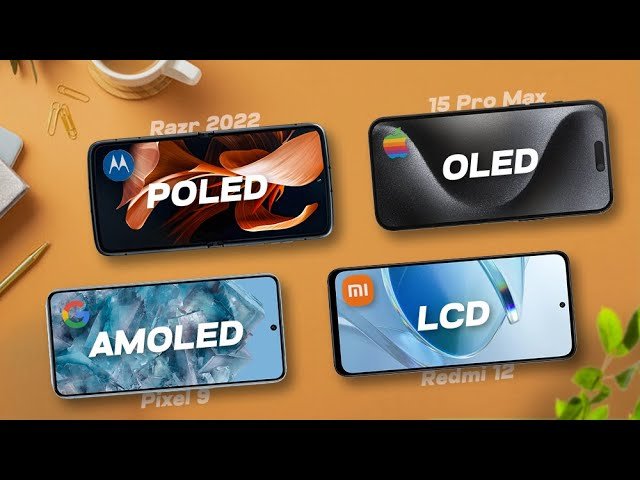
Choosing the right smartphone or device display has become more confusing than ever. With terms like AMOLED, OLED, and LCD thrown around in product specifications, many consumers are left wondering, “What’s the actual difference?”
In 2025, display technology plays a vital role in how we interact with our devices — from streaming content and gaming to editing photos or simply browsing social media.
This guide will help you understand how these display types work, how they differ, and most importantly, which one is right for you.
Understanding Display Technologies
Before diving into technical comparisons, let’s clarify what these acronyms mean:
- LCD (Liquid Crystal Display): A backlit display using liquid crystals to form images.
- OLED (Organic Light Emitting Diode): Emits light through organic compounds without a backlight.
- AMOLED (Active Matrix OLED): An advanced version of OLED with better power management and refresh rates.
Each technology has its own advantages, suited to different user needs.
What is LCD?
LCD or Liquid Crystal Display is a traditional technology used in screens for decades.
How It Works:
- Uses a backlight to illuminate the screen.
- Liquid crystals modulate the light to create images.
Pros:
- Generally more affordable.
- No risk of burn-in.
- Reliable under bright sunlight.
Cons:
- Poorer contrast than OLED or AMOLED.
- Blacks appear grayish, not truly black.
- Less energy efficient due to constant backlight.
Types of LCD include IPS (In-Plane Switching) and TFT (Thin Film Transistor), each offering varying performance levels.
What is OLED?
OLED stands for Organic Light Emitting Diode.
How It Works:
- Every pixel is self-illuminated.
- No backlight is needed, allowing for better contrast and deeper blacks.
Advantages:
- Infinite contrast ratio.
- Vibrant colors.
- Thinner and lighter panels.
Disadvantages:
- Can suffer from burn-in over time.
- Expensive to manufacture.
While OLED offers excellent display quality, longevity can be a concern in some cases, especially with static UI elements.
What is AMOLED?
AMOLED or Active Matrix OLED builds on OLED with an additional TFT layer that allows each pixel to be activated individually.
Benefits:
- Better refresh rates.
- More energy efficient on dark themes.
- Superior for always-on displays.
Drawbacks:
- Still prone to burn-in like OLED.
- More expensive than traditional LCD.
AMOLED is now the go-to for most flagship devices and is widely appreciated for its performance, especially in high-end smartphones.
Key Differences Between AMOLED, OLED, and LCD
| Feature | LCD | OLED | AMOLED |
|---|---|---|---|
| Backlight Required | Yes | No | No |
| Contrast Ratio | Lower | High | Very High |
| Power Efficiency | Less efficient | Efficient | Most efficient |
| Viewing Angles | Decent | Great | Excellent |
| Burn-in Risk | None | Yes | Yes |
| Thickness | Thicker | Thinner | Thinnest |
| Cost | Low | Medium | High |
AMOLED Pros and Cons
Pros:
- Deep blacks and high contrast
- Excellent for multimedia and gaming
- Superior refresh rates
- Battery efficient on dark mode
Cons:
- Higher risk of image retention (burn-in)
- More expensive than LCD
- Slightly less bright outdoors than LCD
OLED Pros and Cons
Pros:
- Vibrant color reproduction
- Great viewing angles
- Slim design suitable for flexible screens
Cons:
- Risk of burn-in
- Shorter lifespan in some cases
- Less energy-efficient than AMOLED
LCD Pros and Cons
Pros:
- Affordable and widely available
- No risk of burn-in
- Bright and visible outdoors
Cons:
- Poorer contrast and black levels
- Limited color vibrancy
- Bulkier display designs
Best for Gaming: Which Display Wins?
Gamers require:
- High refresh rate
- Fast response time
- Excellent color accuracy
Winner: AMOLED
Thanks to its faster pixel switching and refresh rate capabilities, AMOLED delivers smoother and more immersive gaming performance.
Best for Content Creators: Color Accuracy Showdown
If you’re editing videos, photos, or designing on the go, you need:
- Accurate color reproduction
- Sharp details
- Wide color gamut
Winner: OLED/AMOLED
OLED and AMOLED both support HDR content and offer professional-grade color output.
Which Display Lasts Longer?
LCD:
- No burn-in
- Lasts longer for static content use
OLED/AMOLED:
- May degrade over time if misused
- Requires care with static images
Verdict: LCD wins in longevity but AMOLED is better with modern usage when managed correctly.
Pricing Comparison: Which Offers Better Value?
- LCD devices are generally cheaper
- OLED devices offer a balance between cost and performance
- AMOLED devices are premium and often priced higher
If budget is a constraint, LCD is a solid choice. If you want performance and aesthetics, AMOLED is worth the investment.
FAQs
Q1: Is AMOLED better than OLED?
Yes, AMOLED is considered an improved version of OLED, offering better performance and efficiency.
Q2: Can AMOLED or OLED screens get burn-in?
Yes, both are susceptible to burn-in if static images remain for long periods, though modern software minimizes this risk.
Q3: Is LCD outdated in 2025?
Not entirely. LCD is still used in many mid-range and budget phones due to its cost-effectiveness.
Q4: Which display is best for battery life?
AMOLED typically provides the best battery life, especially when using dark themes.
Q5: Are OLED displays good for reading?
Yes. With proper brightness settings and dark mode, OLED is gentle on the eyes.
Q6: Can I see a difference between OLED and AMOLED with the naked eye?
Most users may not notice a huge difference, but AMOLED usually appears slightly more vibrant and responsive.
Conclusion: Which Display Should You Choose?
Your ideal display depends on your usage:
- For general use and tight budgets: LCD is a reliable option.
- For media consumption and design: OLED provides excellent visuals.
- For gaming, flagship performance, and energy efficiency: AMOLED is the best choice.
In 2025, all three display types remain relevant. Understanding their strengths and weaknesses can help you make an informed decision for your next smartphone, tablet, or laptop.